


Red Label, Black Label and Double Black are different whisky expressions with distinct flavour profiles. CityDrinks educational illustration.
Red Label is the livelier, mixing-led direction in the Johnnie Walker range; Black Label combines sweetness with smoke, while Double Black puts more emphasis on smoky intensity. At CityDrinks, we would start with those preferences rather than assume that a darker label is a better fit for everyone. The three names identify different blended Scotch expressions, not a simple scale of how experienced the drinker should be.
If you already enjoy Black Label, the most useful question about Double Black is whether you actually want more smoke. If you do not, paying more for that different emphasis may take you away from the characteristic you liked in the first place.
A quick comparison of the three labels
The flavour directions below draw on the producer’s range descriptions. The prices are separate, dated observations from the linked CityDrinks one-litre product pages, checked on 19 October 2026. They are single-bottle product prices rather than final checkout totals.
| Expression | Useful flavour direction | Checked format | Displayed price |
|---|---|---|---|
| Johnnie Walker Red Label | Lively, bold and designed with mixing in mind | 1,000 ml | AED 70 |
| Johnnie Walker Black Label | Sweetness alongside a smoky character | 1,000 ml | AED 139 |
| Johnnie Walker Double Black | A more smoke-led, intense direction | 1,000 ml | AED 180 |
This is a comparison of expressions, not a claim that a particular price or position in the range measures quality. No flavour score has been assigned, and the descriptions are not presented as a new CityDrinks tasting.
Red Label: a different role, not an unfinished Black Label
In its official range overview, Johnnie Walker describes Red Label as bold, vibrant and intended for mixing. That explains its direction more usefully than calling it a lesser version of another label.
For a reader, the practical question is whether that character fits the way they intend to use the whisky. A preference for a familiar mixed-drink profile does not become less valid because another expression costs more.
Equally, a producer’s mixing-led description is not a rule forbidding other ways of serving it. It tells you the intended character, not how to pass a whisky knowledge test. The expression should be understood on its own terms before being compared with Black Label or Double Black.
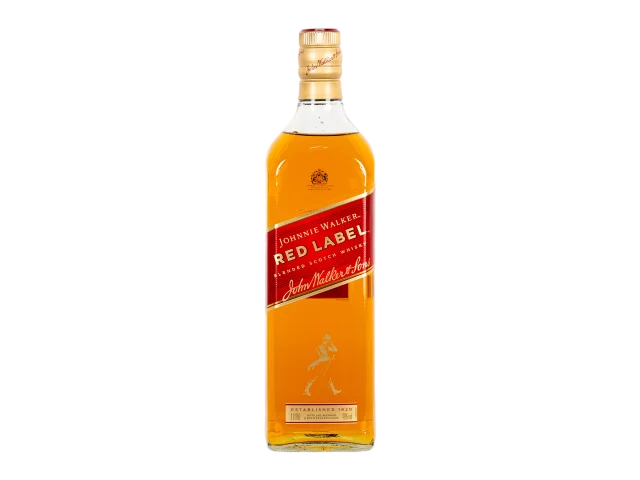
Johnnie Walker Red Label
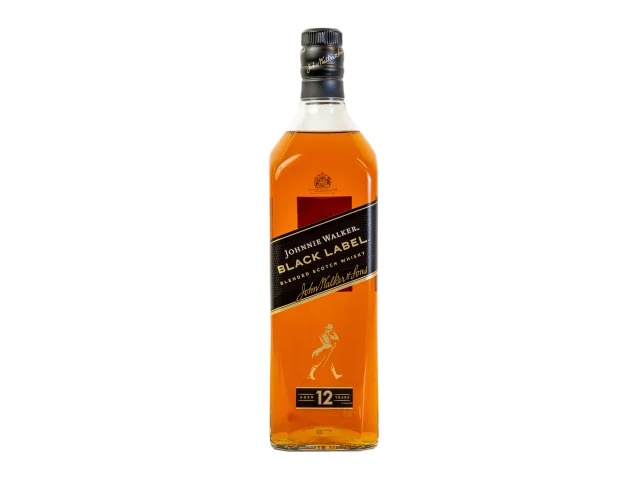
Johnnie Walker Black Label
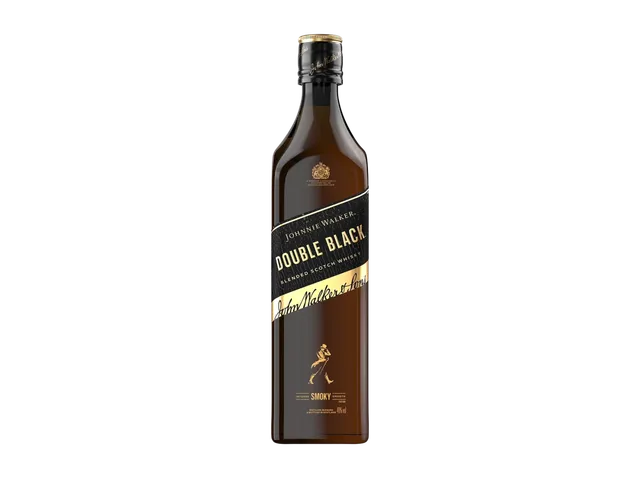
Johnnie Walker Double Black
Jack Daniel's Old No.7 Tennessee Whiskey
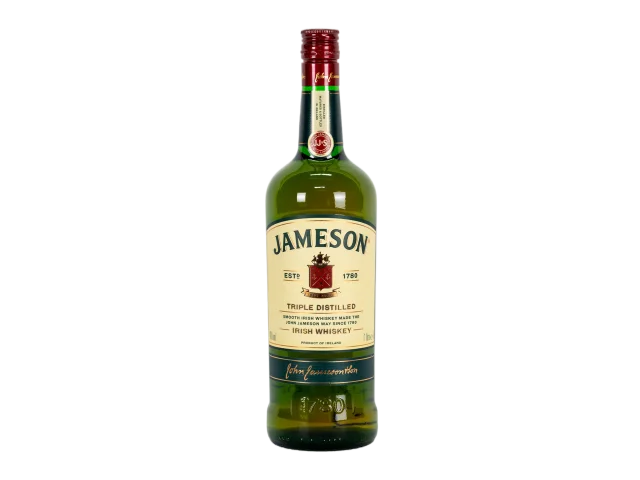
Jameson Triple Distilled Irish Whiskey
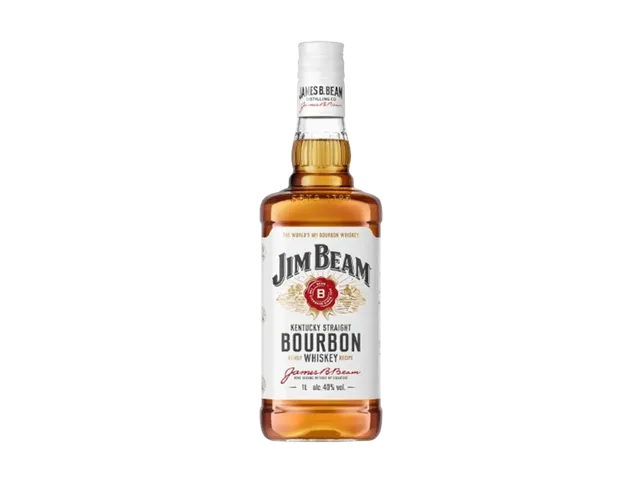
Jim Beam Kentucky Straight Bourbon
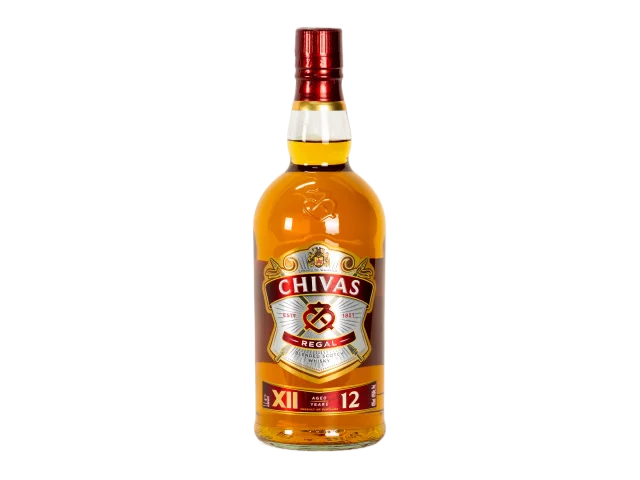
Chivas Regal 12 Year Old Blended Scotch
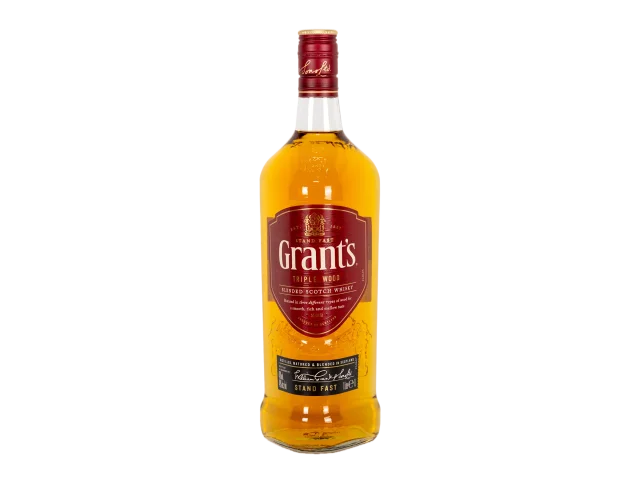
Grant's Triple Wood Blended Scotch
Black Label: smoke is already part of the profile
It is easy to assume that Black Label is the non-smoky option because Double Black is more strongly associated with smoke. The producer’s Black Label page explicitly describes sweetness together with smoke.
That distinction matters if smoke is a characteristic you dislike. “Less smoke-led than Double Black” is not the same as a promise that you will perceive no smoke. Explain that preference directly when comparing the releases.
Black Label also carries a 12-year age statement. It is a useful product detail, but it does not tell you whether its particular balance of flavours will suit you. Someone can prefer Red Label’s direction or Double Black’s emphasis without misunderstanding the age number.
Double Black: ask whether more smoke is what you want
The producer describes Double Black through a more intense smoky direction, including the influence of naturally smoky whiskies and charred casks. Its name should be read as an expression identity, not a mathematical instruction.
For someone who liked Black Label but wanted smoke to play a more prominent role, Double Black is a relevant direction to investigate. For someone who liked the sweetness but wanted less smoke, it is not an obvious next step.
This is where a specific preference is much more useful than the word premium. The change in character is part of the choice. A higher product price does not make that change desirable for every person.
Does Double Black mean double the age or strength?
No. The word Double in the name is not an age statement, and it cannot establish that the alcohol percentage is twice that of Black Label. Read the actual label for the specification being supplied.
Black Label’s stated age should not be copied into Double Black’s description simply because the names are related. Likewise, do not manufacture a 24-year age from the number 12 and the word Double. They are different expressions with their own product information.
If age or strength is the detail you are trying to compare, ask for it explicitly. This review confirms the checked volumes and prices; it does not use a market-specific strength from an overseas page as proof of every UAE bottle’s specification.
Three preferences, three different questions
“I want something for the familiar mixed drink I already enjoy.”
Red Label’s producer-described mixing role makes it relevant to that discussion. Keep the rest of the drink in mind: a strongly flavoured mixer changes which whisky characteristics remain noticeable. A more expensive expression does not automatically provide a change you want in that context.
“I like sweetness and some smoke, but do not want the smoke to dominate.”
Black Label’s described direction is worth investigating. Explain how much smoke you already enjoy, preferably with the name of a previous whisky. Words such as balanced and smooth are subjective unless they are connected to an actual preference.
“I enjoy Black Label and would like a more smoky direction.”
Double Black is the closer expression to investigate within this three-way comparison. That is a narrower, more useful statement than claiming it is always the next level. The preference for more smoke is the condition that makes the suggestion relevant.
How much does the change cost in the checked formats?
For the one-litre listings checked, moving from Red Label to Black Label changed the displayed price from AED 70 to AED 139. Moving from Black Label to Double Black changed it from AED 139 to AED 180, a difference of AED 41.
Those figures put a budget beside the flavour question. They do not explain the manufacturer’s full pricing decisions, and they do not establish a market-wide best offer. Use the exact product pages for the current price when you revisit the choice.
For the separate question of Black Label prices and quantity conditions, our published Black Label price guide remains the detailed reference. This article focuses on what changes between the expressions, rather than repeating that guide’s price calculations.
Do not let the colour hide the product name
The brand has other expressions beyond these three. A similarly coloured label, a limited release or another product with Black in its name should not be treated as an identical replacement without reading the full title.
Bottle size deserves the same attention. The table here holds the format constant at one litre so that the stated price differences do not conceal a volume difference. A smaller bottle at a lower bottle price would be a different comparison.
If an alternative is proposed, ask whether the change concerns the expression, the format or the presentation. A substitution can be acceptable, but it should answer the same preference that led you to the original choice.
How to describe smoke without pretending to be an expert
You do not need to identify a distillery or a particular type of cask to explain your preference. “I notice a smoky aroma and enjoy it” is useful. So is “I prefer fruit and sweetness, but smoky flavours tend to dominate for me”.
The next step is to compare those preferences with the producer’s descriptions of the actual expressions. Avoid turning smoke into a numerical quality score. More smoke can be interesting to one reader and distracting to another.
Also keep alcoholic strength separate from flavour intensity. A whisky can feel more assertive in a particular aroma without that alone proving a higher alcohol percentage. The name, the description and the measured specification answer different questions.
A better request than “Which colour is best?”
Try: “I enjoy Black Label’s sweeter side, but want to know how much more smoke-led Double Black is intended to be. I would like the same bottle volume, and I am comfortable comparing the current price difference.”
Or: “I am choosing for a familiar mixed drink and want to understand whether a change from Red Label would make sense for the flavours I want.” Both requests give the recommendation a clear purpose.
At CityDrinks, we want an explanation that connects the expression to that purpose. The colour makes the bottle easy to recognise; it cannot decide whose taste it will suit.

Questions about Red Label, Black Label and Double Black
What is the main difference between Black Label and Double Black?
The producer positions Double Black in a more smoke-led, intense direction. Black Label already includes smoke, with sweetness also part of its described character. Preference determines whether that change is attractive.
What was the Double Black price in the UAE comparison?
The checked CityDrinks one-litre listing displayed AED 180 on 19 October 2026. Red Label was AED 70 and Black Label AED 139 for the compared one-litre formats. Check current listings before relying on those figures.
Is Red Label only for beginners?
No. The producer gives it a mixing-led role; that does not classify the experience or knowledge of the person choosing it. Intended use and preferred flavour are more useful than a beginner-to-expert ladder.
Is a darker label always the better choice?
No. Different expressions emphasise different characteristics. Choose by the relevant flavour direction, exact format and budget, rather than treating colour as a universal ranking.


